
From the Sensex firms, Eternal, Mahindra & Mahindra, Maruti, Bajaj Finance, Tata Steel, Bharti Airtel, Bajaj Finserv, Asian Paints, Power Grid and State Bank of India were among the laggards. Kotak Mahindra Bank, Axis Bank, Titan, HCL Tech, Tata Motors, Infosys and Tata Consultancy Services were the gainers.

Tharoor led a multi-party delegation, visiting various countries, to apprise the world about India's stand against cross-border terrorism following Operation Sindoor, which was launched in retaliation against the ghastly Pahalgam terror attack that claimed 26 lives.

Some Pakistan newsreports say a map being circulated shows J&K and PoK as one entity.
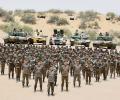
He also reviewed the joint actions undertaken in coordination with the Indian Air Force and the Border Security Force, they said.

India on Sunday said it inflicted tremendous losses to the Pakistan military, including downing its fighter jets featuring latest technologies and damaging key military installations close to even capital Islamabad, during the three-day confrontation between the two sides.
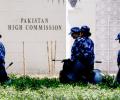
Pakistan has expressed condolences over the deaths of tourists in a terror attack in Pahalgam, Jammu and Kashmir, that killed 26 people. The Foreign Office spokesperson said Pakistan is concerned at the loss of tourists' lives and wished the injured a speedy recovery. The attack, claimed by The Resistance Front (TRF), a proxy of the banned Pakistan-based Lashkar-e-Taiba (LeT), is the deadliest in the Valley since the Pulwama strike in 2019.

According to authorities, Ghulam Nabi Khan alias Amir Khan had a wall built on encroached land as an extension to his house in Liver Pahalgam in the south Kashmir district.

Union Home Minister Amit Shah on Wednesday blamed India's first Prime Minister Jawaharlal Nehru's "two major blunders" -- declaring a ceasefire without winning the entire Kashmir and taking the issue to the United Nations -- for the sufferings of the people of Jammu and Kashmir.
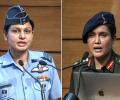
India conducted precision strikes on nine terror targets in Pakistan and Pakistan-Occupied Kashmir, targeting terrorist infrastructure to deter further attacks. The operation, codenamed 'Operation Sindoor', was detailed by two women military officers, Col Sofiya Qureshi and Wing Commander Vyomika Singh, at a press briefing in New Delhi. The officers highlighted the precise nature of the strikes, emphasizing the use of "niche technology weapons" to ensure no collateral damage. The briefing showcased India's military prowess and the growing role of women in the armed forces.
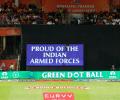
The Indian Premier League (IPL) 2025 season has been officially suspended due to escalating military tensions between India and Pakistan.
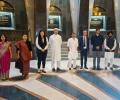
Terrorism is a global menace to be addressed by humanity in unison was the all-party delegation's message to Algeria as it concluded its visit to the North African country on Sunday.
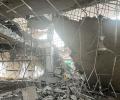
Indian Air Force S-400 Sudarshan Chakra air defence missile systems were fired last night against targets moving towards India. The targets were successfully neutralised in the operation multiple domain experts told ANI.
A day after India and China sparred aggressively over the ownership status of Arunachal Pradesh, India said that China must cease activities in Pak-Occupied Kashmir.
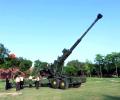
The Indian government outlines its futuristic defence programme, Sudarshan Chakra Mission, focusing on indigenous development, predictive technologies, and targeted counter-action systems to enhance national security.
The Bharatiya Janata Party on Saturday accused the United Progressive Alliance government of overturning India's Kashmir policy by making 'dangerous' proposals like facilitating the return of Kashmiri youths from Pakistan-Occupied Kashmir. "The government is now saying that the young men who had gone to PoK for arms training have had a change of heart and proposes to facilitate their return to India. This is a dangerous statement and is not in favour of the country," said BJP

"Around 3:30 am Pakistan troops opened small arms fire and then switched to machine gun fire. Subsequently they started firing mortars at Darkote, Platan and Channi Dewanu posts of the Indian army," a police officer from Khour police station was quoted as saying.
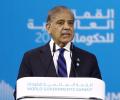
Sharif said that the US president had shown beyond any doubt that "he is a man for peace... and beneficial business deals".
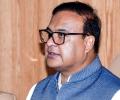
Assam Chief Minister Himanta Biswa Sarma has accused Congress MP Gaurav Gogoi of having a 'deeper connection' with a Pakistani national and violating FCRA rules, prompting calls for a national probe.
People's Democratic Party chief Mehbooba Mufti on Monday hit back at Home Minister P Chidambaram, who had warned the party of stern action over its controversial propaganda map.

The ministry of external affairs also seemed to reject Trump's forceful comments that Washington brokered the understanding between India and Pakistan on ending their four-day military conflict.
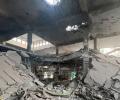
'There's something called deterrence by punishment.' 'That means you hit in a manner calculated to raise costs and consequences for Pakistan, so that the next time it attempts a Pahalgam-like attack, it has to think ten times.'
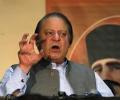
Pakistan on Wednesday described as "incorrect" a media report that Prime Minister Nawaz Sharif had contended the Kashmir issue is a flashpoint which "can trigger a fourth war" with India.
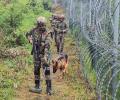
The Indian Army has enhanced security along the Line of Control (LoC) in Jammu and Kashmir's Rajouri district by deploying state-of-the-art equipment, including smart fence systems, robotic mules, and all-terrain vehicles. These upgrades aim to counter infiltration and ensure peaceful Independence Day celebrations.
"We strongly condemn this attack. The bus service is a humanitarian gesture to reunite the divided families. The innocent travellers have committed no crime," Pakistan Foreign Office spokesman Jalil Abbas Jilani told PTI.
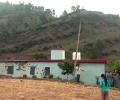
Heavy Pakistani shelling in the border district of Poonch in Jammu and Kashmir left nine people dead and 28 injured. The shelling, described by residents and officials as "barbaric and cowardly", started around 2 am, damaging dozens of residential houses, shops, vehicles, and heritage sites. The incident comes after India launched "Operation Sindoor" in retaliation to the April 22 Pahalgam terror attack. India condemned the act, calling it a cowardly attack on civilians, and reaffirmed that civilian safety remains its top priority.
After lying low for over a year due to the scrutiny of its leaders in the wake of the Mumbai attacks, Jamaat-ud-Dawah, the frontal outfit of Lashkar-e-Tayiba, has stepped up its activities and unveiled plans to hold major conferences of Pakistani jihadi groups on Kashmir this week.

'I am the daughter of a martyr and had lost my father in Kashmir in 1994. I understand what drastic circumstances life brings in front of you.'
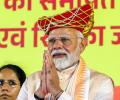
"In Pahalgam, terrorists not only shed the blood of Indians, but also attacked our culture. They tried to divide our society and the biggest thing is that the terrorists have challenged the women power of India," Modi said.
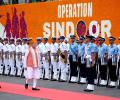
The bilingual -- Hindi and English -- invitation cards for I-Day anniversary celebrations carry this image on the top right corner of the invite, while the silhouetted image of the Chenab bridge, the world's tallest railway arch bridge, sits at the lower side of the cards, which have largely being issued online via 'Aamantran' website of the Ministry of Defence.

'It is surprising that Pakistan has suddenly taken the decision of not participating in the FIDE Chess Olympiad, particularly after the team has already reached India'.
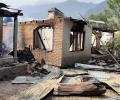
Hundreds of residents along the Line of Control (LoC) and the International Border (IB) in Jammu and Kashmir were evacuated to safer zones after Pakistani shelling following Indian airstrikes on terror targets in Pakistan. The shelling killed 12 people, including four children and two women, and injured over 50. The evacuations come amid heightened tensions between India and Pakistan following the April 22 terror attack in Pahalgam that left 26 civilians dead. The government has provided temporary shelter for those evacuated.
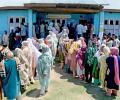
Addressing a press conference in New Delhi, Chief Election Commissioner Rajiv Kumar said the EC was very enthused by the voter turnout in Jammu and Kashmir during the Lok Sabha elections, which showed the eagerness of the people to participate in the democratic process.

So, when to start, when to stop, how much to apply in terms of time, space and resources, and how much, what is the definition of calibrated action, all these things were something "we kept discussing at every time," Gen Dwivedi recalled.

From the Sensex firms, Adani Ports, Eternal, Bajaj Finance, Axis Bank, Bajaj Finserv, Reliance Industries, Power Grid and NTPC were the major gainers. Sun Pharma, however, tanked over 5 per cent.
The proposal, which came from the Jammu and Kashmir government, will do away with cumbersome and time-consuming procedures under which applications for travel get delayed for months together.
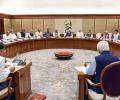
India has reached out to key global powers, including members of the UN Security Council, and apprised them about the reasons behind its military strikes on nine terror targets in Pakistan and Pakistan-occupied-Kashmir in retaliation for the Pahalgam terror attack. New Delhi also conveyed to the countries that it will retaliate if Islamabad escalates the already tense situation.
